For decades, scientists have dreamed of building computer systems that could replicate the human brain’s talent for learning new tasks.
MIT researchers have now taken a major step toward that goal by designing a computer chip that mimics how the brain’s neurons adapt in response to new information. This phenomenon, known as plasticity, is believed to underlie many brain functions, including learning and memory.
A companion blog for the book This Is Philosophy of Mind: An Introduction, 2nd Edition by Pete Mandik, from Wiley-Blackwell Publishers.
Wednesday, November 16, 2011
Mimicking the brain, in silicon - MIT News Office
Monday, November 14, 2011
Is Neuroscience the Death of Free Will? - NYTimes.com
Is Neuroscience the Death of Free Will? - NYTimes.com:
Philosopher Eddy Nahmias in the New York Times:
Is free will an illusion? Some leading scientists think so. For instance, in 2002 the psychologist Daniel Wegner wrote, “It seems we are agents. It seems we cause what we do… It is sobering and ultimately accurate to call all this an illusion.” More recently, the neuroscientist Patrick Haggard declared, “We certainly don’t have free will. Not in the sense we think.” And in June, the neuroscientist Sam Harris claimed, “You seem to be an agent acting of your own free will. The problem, however, is that this point of view cannot be reconciled with what we know about the human brain.”
Sunday, October 23, 2011
Thursday, October 20, 2011
Tuesday, October 18, 2011
Saturday, October 8, 2011
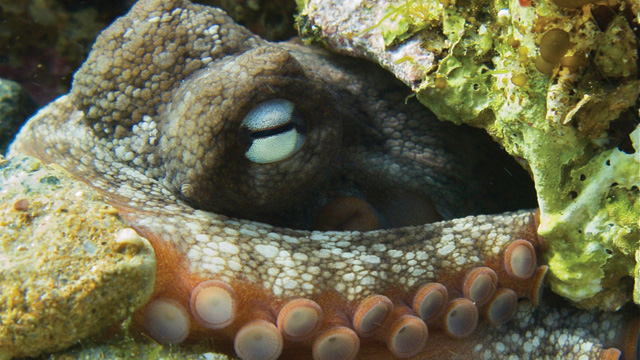
Octophilosophy | The Scientist
Octophilosophy | The Scientist:
"Godfrey-Smith decided to connect this biological concept with his interest in the philosophy of mind, particularly in nonhumans. In 2010, he began a project with Alexandra Schnell, a graduate student at Macquarie University in Sydney, to conduct behavioral observation studies that address whether octopus intelligence differs from that of other species. Do octopuses learn differently? Does the decentralization of neurons mean cephalopods have multiple minds or competing consciousnesses?"
Comprehensive exam questions in philosophy of mind at Tufts
Comprehensive exam questions in philosophy of mind at Tufts:
http://ase.tufts.edu/philosophy/graduate/comps.asp#mind
Subscribe to:
Posts (Atom)